May is Lyme Disease Awareness Month and Virginia consistently ranks among the top 10 states in the country for confirmed Lyme disease cases. The Charlottesville area’s mix of wooded neighborhoods, deer corridors, and humid summers makes it a prime environment for ticks.
Lyme disease is the most commonly reported tick-borne illness in the United States, and the threat isn’t just out on the trail or in the woods. Ticks can make their way into your yard, your garden, and even your home by hitching a ride on pets or clothing.
At Monticello Pest Solutions, protecting your property means protecting your family. Here’s what you need to know now that peak tick season is here and the warning signs that your yard may already be putting your family at risk.
*Medical Disclaimer: The health information in this post is for general awareness only and is not medical advice. If you suspect you or a family member may have Lyme disease, please consult a licensed healthcare provider for diagnosis and treatment.
What Is Lyme Disease?
Lyme disease is a bacterial infection spread through the bite of an infected blacklegged tick, commonly called a deer tick. Once a tick has been attached for 36 to 48 hours, it can transmit the bacteria into your bloodstream. From there, if left untreated, the infection can spread to your joints, heart, and nervous system.
What starts as a tick bite can turn into a serious health issue that lingers for months or longer, which is exactly why early awareness and prevention matter so much.
What Types of Ticks Transmit Lyme Disease?
Not every tick carries Lyme disease, but in our area, the blacklegged tick is the one to watch for. Adults are roughly the size of a sesame seed. Nymphs, which are responsible for most human infections, are closer to the size of a poppy seed. They’re hard to spot on skin, easy to miss on clothing, and perfectly capable of hitching a ride inside on a pet or jacket without anyone noticing.
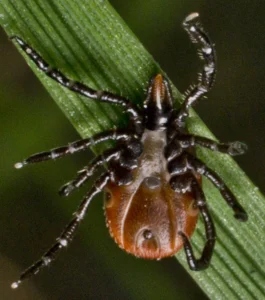
blacklegged tick, commonly referred to as a deer tick.
Image Credit: PestWorld.org
5 Signs Ticks May Already Be in Your Yard
1. You Have Wooded Edges or Overgrown Areas
Ticks don’t hang out in the middle of a mowed lawn. They wait in transition zones where your grass meets the woods, the brush, or the leaf pile you’ve been meaning to clean up. Dense ground cover, shaded corners, and unmaintained shrub borders create exactly the kind of damp, sheltered environment ticks need to survive and thrive.
2. You’ve Seen Deer, Mice, or Other Wildlife in the Yard
White-tailed deer and white-footed mice are the primary hosts for blacklegged ticks at different points in their life cycle. If deer are passing through your yard or you’ve noticed signs of mice near your foundation or wood pile, your property is likely sitting along an active tick route. Where the wildlife goes, the ticks follow.
3. You or Someone in Your Family Found a Tick After Being Outside
Finding a tick on yourself, your child, or your dog after spending time in the yard isn’t just an unpleasant fluke, it’s a clear signal that your property has an active tick population. If you’ve found one, there are more.
4. Your Pets Spend Time Outside
Dogs and cats are efficient at carrying ticks indoors. Even if you check your pets regularly, it’s easy for a tiny nymph to slip through. Pets without tick prevention significantly raise the odds of a tick making it inside and finding a human host, often without anyone realizing it.
5. You’ve Noticed Leaf Litter, Dense Ground Cover, or Neglected Beds Around Your Home
Piles of dead leaves, thick mulch beds along your foundation, and overgrown garden areas are prime tick habitat, especially when they’re shaded and stay damp. If your yard has these conditions and hasn’t been treated this season, you may already have a tick population moving in.
Symptoms of Lyme Disease to Watch For
Early Lyme disease symptoms typically appear anywhere from three days to a month after a bite. The most recognizable sign is the bull’s-eye rash, which starts at the bite site and gradually expands outward. It appears in roughly 70 to 80 percent of cases, though not always.
Early symptoms include:
- Fatigue
- Fever and chills
- Headache
- Muscle or joint aches
- Bull’s-eye rash at the bite site
Later symptoms, if left untreated, can include:
- Severe joint pain and swelling
- Facial palsy
- Heart palpitations
- Nerve pain or numbness
If you or anyone in your family develops these symptoms after potential tick exposure, see a doctor promptly. Early treatment is highly effective.
What You Can Do to Minimize Risk of Tick Exposure
Good habits go a long way during tick season:
- Wear light-colored long sleeves and pants in wooded or brushy areas
- Use an EPA-registered repellent containing DEET or picaridin
- Do a full-body tick check on yourself, your kids, and your pets after spending time outside
- Shower within two hours of coming inside to wash off any ticks that haven’t attached yet
- If you find an attached tick, remove it carefully with fine-tipped tweezers, gripping close to the skin and pulling straight up
These habits reduce your risk, but they don’t eliminate it, especially in your own backyard. We strongly recommend getting your yard treated by a professional pest control company.
Protect Your Family This Season
If you’ve spotted any of these warning signs, now is the right time to act. Schedule your tick treatment today with one of our pest professionals. We’ll use our effective and professional products to protect you and your family. And if you want to protect your property from other seasonal invaders and pests, ask our team about our regular service plan options.
Don’t wait until someone gets bitten by a tick. Be proactive and call Monticello Pest Solutions at (434) 218-3331 to schedule a tick treatment for your home.
For more information on Lyme disease prevention and tick safety, visit the CDC’s Lyme Disease resource page or the Virginia Department of Health.

